
Hawaii towing laws and impound fees
We haven't covered a city in Hawaii yet.
Informational only, not legal advice. Fees change and many are set by cities or counties. Confirm the current amount with the tow lot or the agency that ordered the tow.
On this page
At a glance
- Private-property tow (light-duty)
-
Up to $75
Maximum a towing company hired by the property owner may charge for a tow from private or public property; Act 60 of 2024 set it at $75. The charges in this list (tow, mileage, storage, difficult-hookup surcharge, night and weekend charge, overturned-vehicle charge) are the only charges such a company may collect from the vehicle owner. For a police-ordered tow under a county ordinance, or a disabled or accident vehicle, tow and storage charges may not exceed these amounts or the county's agreed rate, whichever is lower; for those tows the company may also charge reasonable extra amounts to excavate a vehicle from an off-road location. These state limits do not apply in a county that has adopted ordinances regulating towing operations, and the police-tow section does not apply to auto clubs or towing companies working under contract with an auto club, insurer or vehicle manufacturer.Sources: Hawaii State Legislature - Hawaii Revised Statutes (data.capitol.hawaii.gov) [34] [35] [36] [5] [40] [41] [32] [42] [43]; Hawaii State Legislature - session documents (data.capitol.hawaii.gov) [37] [38] [39] · verified Oct 28, 2026 - Police / non-consent tow (light-duty)
-
Up to $75
Maximum a towing company hired by the property owner may charge for a tow from private or public property; Act 60 of 2024 set it at $75. The charges in this list (tow, mileage, storage, difficult-hookup surcharge, night and weekend charge, overturned-vehicle charge) are the only charges such a company may collect from the vehicle owner. For a police-ordered tow under a county ordinance, or a disabled or accident vehicle, tow and storage charges may not exceed these amounts or the county's agreed rate, whichever is lower; for those tows the company may also charge reasonable extra amounts to excavate a vehicle from an off-road location. These state limits do not apply in a county that has adopted ordinances regulating towing operations, and the police-tow section does not apply to auto clubs or towing companies working under contract with an auto club, insurer or vehicle manufacturer.Sources: Hawaii State Legislature - Hawaii Revised Statutes (data.capitol.hawaii.gov) [34] [35] [36] [5] [40] [41] [32] [42] [43]; Hawaii State Legislature - session documents (data.capitol.hawaii.gov) [37] [38] [39] · verified Oct 28, 2026 - Daily storage (private-property tow)
-
Up to $25 / day
Maximum per day or fraction of a day for the first seven days; from the eighth day the limit is $20 a day. No storage (or tow) charge may be collected if the owners were not sent the required notice in time, or if the tow operator does not carry the insurance the law requires.Sources: Hawaii State Legislature - Hawaii Revised Statutes (data.capitol.hawaii.gov) [44] [5] [45] [46] [47] · verified Oct 28, 2026 - Daily storage (police tow)
-
Up to $25 / day
Maximum per day or fraction of a day for the first seven days; from the eighth day the limit is $20 a day. No storage (or tow) charge may be collected if the owners were not sent the required notice in time, or if the tow operator does not carry the insurance the law requires.Sources: Hawaii State Legislature - Hawaii Revised Statutes (data.capitol.hawaii.gov) [44] [5] [45] [46] [47] · verified Oct 28, 2026 - Earliest lien sale
-
30 days after the mailing of the towing company's notice
Sources: Hawaii State Legislature - Hawaii Revised Statutes (data.capitol.hawaii.gov) [70] [71] [72] [73] [74] [75] [76] [77] [78] [79] [80] [81] [82] [83] [84] [85]; Hawaii State Legislature - session documents (data.capitol.hawaii.gov) [86] [87] [88] · verified Oct 28, 2026 - Deadline to request a hearing
-
Not found statewide
Sources: Hawaii State Legislature - Hawaii Revised Statutes (data.capitol.hawaii.gov) [101] [102] [103] [104] [105] [47] [62]; Hawaii Department of Commerce and Consumer Affairs (DCCA) [106] [107]; Honolulu Police Department (City and County of Honolulu) [108] [109] · verified Oct 28, 2026
- Regulator
- No single statewide towing regulator found.
- Key laws
- HRS § 290-11 Vehicles left unattended on private and public property: signs, maximum towing and storage charges, release at the scene, owner notice, payment, sale
- HRS § 291C-165.5 Police-ordered and disabled-vehicle towing and storage: charges limited to HRS 290-11(b) or the county rate, owner notice, sale
- HRS ch. 290, part I (§§ 290-1 to 290-13) Abandoned and derelict vehicles taken into custody by the counties: notice, auction, repossession, proceeds
- HRS § 290-41 Tow companies must notify the county police before towing
- HRS §§ 291C-135 and 291C-136 Tow truck signs and insurance; payment for towing by consent
- HRS § 291C-115 Wheel boots prohibited
- HRS § 46-20.5 Counties may adopt ordinances regulating towing operations, including rates
- HRS § 249-10, as amended by Act 73 (2026) Seizure and sale of vehicles with weight tax delinquent for a year or more or without number plates
- HRS § 431:10C-117 Motor vehicle insurance penalties, including impoundment after repeat uninsured driving
- HRS ch. 290, part II (§§ 290-21 to 290-25) Vehicles abandoned at a motor vehicle repair business
Estimate your bill in Hawaii
The most a lot can legally charge you under Hawaii's statewide rules, line by line. Where a fee is set locally, enter the rate the lot quoted.
Fees in Hawaii
| Fee | Applies to | Amount | Conditions and source |
|---|---|---|---|
| Tow (no dolly) | Private property, Police / non-consent | Up to $75Statewide maximum, effective Jul 1, 2024 | Maximum a towing company hired by the property owner may charge for a tow from private or public property; Act 60 of 2024 set it at $75. The charges in this list (tow, mileage, storage, difficult-hookup surcharge, night and weekend charge, overturned-vehicle charge) are the only charges such a company may collect from the vehicle owner. For a police-ordered tow under a county ordinance, or a disabled or accident vehicle, tow and storage charges may not exceed these amounts or the county's agreed rate, whichever is lower; for those tows the company may also charge reasonable extra amounts to excavate a vehicle from an off-road location. These state limits do not apply in a county that has adopted ordinances regulating towing operations, and the police-tow section does not apply to auto clubs or towing companies working under contract with an auto club, insurer or vehicle manufacturer.Sources: Hawaii State Legislature - Hawaii Revised Statutes (data.capitol.hawaii.gov) [34] [35] [36] [5] [40] [41] [32] [42] [43]; Hawaii State Legislature - session documents (data.capitol.hawaii.gov) [37] [38] [39] · verified Oct 28, 2026 |
| Tow using a dolly | Private property, Police / non-consent | Up to $85Statewide maximum, effective Jul 1, 2024 | Maximum for a tow using a dolly, set at $85 by Act 60 of 2024; charged instead of the $75 tow, not on top of it. The same scope as the tow limit applies.Sources: Hawaii State Legislature - Hawaii Revised Statutes (data.capitol.hawaii.gov) [34] [5]; Hawaii State Legislature - session documents (data.capitol.hawaii.gov) [37] [39] · verified Oct 28, 2026 |
| Mileage charge, per mile towed | Private property, Police / non-consent | Up to $7.50 / mileStatewide maximum | Maximum per mile towed, added to the tow charge.Sources: Hawaii State Legislature - Hawaii Revised Statutes (data.capitol.hawaii.gov) [34] [5] · verified Oct 28, 2026 |
| Daily storage, first seven days | Private property, Police / non-consent | Up to $25 / dayStatewide maximum | Maximum per day or fraction of a day for the first seven days; from the eighth day the limit is $20 a day. No storage (or tow) charge may be collected if the owners were not sent the required notice in time, or if the tow operator does not carry the insurance the law requires.Sources: Hawaii State Legislature - Hawaii Revised Statutes (data.capitol.hawaii.gov) [44] [5] [45] [46] [47] · verified Oct 28, 2026 |
| Daily storage, from the eighth day | Private property, Police / non-consent | Up to $20 / dayStatewide maximum | Maximum per day after the first seven days of storage.Sources: Hawaii State Legislature - Hawaii Revised Statutes (data.capitol.hawaii.gov) [44] [5] · verified Oct 28, 2026 |
| Difficult hookup surcharge | Private property, Police / non-consent | Up to $30Statewide maximum | Only for an above-ground or below-ground hookup in a multilevel facility (such as a parking garage).Sources: Hawaii State Legislature - Hawaii Revised Statutes (data.capitol.hawaii.gov) [48] [49] [5] · verified Oct 28, 2026 |
| Night and weekend (overtime) charge | Private property, Police / non-consent | Up to $15Statewide maximum | For a tow between 6 p.m. and 6 a.m. Monday through Thursday, or between 6 p.m. Friday and 6 a.m. Monday.Sources: Hawaii State Legislature - Hawaii Revised Statutes (data.capitol.hawaii.gov) [50] [5] · verified Oct 28, 2026 |
| Overturned vehicle charge | Private property, Police / non-consent | Up to $35Statewide maximum, effective Jul 1, 2024 | Additional charge of no more than $35 when the tow involves an overturned vehicle; added by Act 60 of 2024.Sources: Hawaii State Legislature - Hawaii Revised Statutes (data.capitol.hawaii.gov) [51] [40]; Hawaii State Legislature - session documents (data.capitol.hawaii.gov) [37] [39] · verified Oct 28, 2026 |
| Release at the scene (owner returns during hookup) | Private property | No chargeFixed statewide | If you (or another vehicle owner, such as a person with the key or the renter) arrive while the vehicle is being hooked up, up to the point when the tow truck drives away, the tow company must release it to you and may not charge any fee. The scene includes anywhere within 50 feet of where the vehicle was hooked up.Sources: Hawaii State Legislature - Hawaii Revised Statutes (data.capitol.hawaii.gov) [52] [53] [54] [55] · verified Oct 28, 2026 |
Local rates. State law lets each county council adopt ordinances regulating towing operations, including rates, storage and hours, and the state rules on private-property and police-ordered tows do not apply in a county that has adopted such ordinances. For police-ordered tows, charges may not exceed the state maximums or the rate agreed with the county, whichever is lower. In any county with more than 500,000 people, towing companies must offer service, including release of stored vehicles, 24 hours a day, every day. Sources: Hawaii State Legislature - Hawaii Revised Statutes (data.capitol.hawaii.gov) [110] [32] [42] [5] [111] [112] · verified Oct 28, 2026
Major cities (largest cities in the state, Census Bureau Vintage 2025 estimates): Urban Honolulu. Where a fee above is set locally, the city or the agency that ordered the tow sets the rate.
Cities we cover
We haven't covered a city in Hawaii yet.
Police tow vs. private-property tow
Police-ordered (non-consent) tow
County police remove vehicles under county traffic ordinances (in Honolulu, for violations of listed sections of the city's traffic code), and vehicles in an accident that cannot be moved under their own power or are otherwise disabled may be towed at the registered owner's expense. In Honolulu the police call the towing company holding the city contract for that zone. These tow and storage charges may not exceed the state maximums for private-property tows or the rates agreed with the county, whichever is lower. Counties must take abandoned vehicles into custody within ten business days: without a county definition, a vehicle is abandoned if it is left unattended for more than 24 hours and unlawfully parked on a public highway, other public property, or a setback, shoulder, easement or right of way next to a highway; a vehicle the police removed under a county ordinance may be treated as abandoned if not claimed within 24 hours. Other impounds and forfeitures: a vehicle whose weight tax has been delinquent for one or more consecutive years, or that has no number plates, may be seized by the county director of finance or a law enforcement officer; after repeat convictions within five years for driving without insurance, the court must impose one or more penalties that can include impoundment, or impoundment and sale; and a vehicle may be forfeited after a conviction for habitual impaired driving, a third conviction within five years for driving while suspended or revoked (or certain other driver's license offenses), or a third excessive-speeding conviction within five years. Airports, schools and public libraries, and the University of Hawaii may also tow unauthorized vehicles at the owner's expense. Sources: Hawaii State Legislature - Hawaii Revised Statutes (data.capitol.hawaii.gov) [1] [2] [5] [6] [7] [8] [9] [11] [12] [13] [14] [15] [16] [17] [18] [19] [20] [21] [22]; Honolulu Police Department (City and County of Honolulu) [3] [4]; Hawaii State Legislature - session documents (data.capitol.hawaii.gov) [10] · verified Oct 28, 2026
Private-property tow
A vehicle left on private or public property without the authorization of the owner or occupant may be towed at the vehicle owner's expense on the order of the owner, occupant or person in charge of the property, but only if a sign prohibiting unauthorized parking is posted. The sign must say, in reflective letters at least two inches high on a contrasting background, that unauthorized vehicles will be towed and held at the owner's expense, and give the name, address and phone number of the place where the vehicle will be held. Where the whole lot is restricted, a sign at each entrance is enough. A vehicle displaying a visible prepaid parking receipt, placard or permit is not parked without authorization. Before towing, the tow company must phone the county police to ask whether they have an investigative interest in the vehicle, and if the vehicle is not claimed within 48 hours it must send the police a written notice. Wheel boots are banned in Hawaii, on public and private property alike. The state rules on private-property tows do not apply in a county that has adopted its own ordinances regulating towing operations; the Honolulu Police Department applies them on Oahu. Sources: Hawaii State Legislature - Hawaii Revised Statutes (data.capitol.hawaii.gov) [23] [24] [25] [26] [27] [28] [29] [30] [31] [32]; Honolulu Police Department (City and County of Honolulu) [33] · verified Oct 28, 2026
How to get your car back, step by step
- Find out who has the car. A sign on private property must give the name, address and phone number of the place where towed vehicles are held, and the tow company must phone the county police before towing, so the police non-emergency line can tell you which company took it. Police-ordered tows in Honolulu go to the city's contract company for that zone. Sources: Hawaii State Legislature - Hawaii Revised Statutes (data.capitol.hawaii.gov) [26] [29]; Honolulu Police Department (City and County of Honolulu) [4] · verified Oct 28, 2026
- If you get back while your car is being hooked up, before the tow truck drives away, ask for it back: the company must release it to you at no charge. Sources: Hawaii State Legislature - Hawaii Revised Statutes (data.capitol.hawaii.gov) [52] [53] · verified Oct 28, 2026
- Check the bill against the state maximums ($75 tow or $85 with a dolly, $7.50 a mile, $25 a day storage for the first seven days and $20 after, plus only the listed surcharges). After a private-property tow the company must give you a receipt showing the maximum charges allowed and the state consumer information phone number. After a police tow, if you recover the car before the notice is mailed, the company must give you a receipt with the maximum charges and the county finance department's phone number. Sources: Hawaii State Legislature - Hawaii Revised Statutes (data.capitol.hawaii.gov) [34] [44] [36] [95] [59] [60] [96] [97] · verified Oct 28, 2026
- Pay and take the car. After a private-property tow, you can pay by cash, credit card or debit card. If you never received the required notice within 15 days (20 days after a police tow), you do not have to pay tow or storage charges. Sources: Hawaii State Legislature - Hawaii Revised Statutes (data.capitol.hawaii.gov) [89] [45] [46] · verified Oct 28, 2026
- Act within 30 days of the notice's mailing date; after that the vehicle can be treated as abandoned and sold or junked. Sources: Hawaii State Legislature - Hawaii Revised Statutes (data.capitol.hawaii.gov) [62] [70] · verified Oct 28, 2026
- If the county seized the vehicle for unpaid weight tax, redeem it within 30 days by paying the taxes due, the delinquent penalties and the storage costs. You do not have to pay these costs if the seizure did not follow the law. Sources: Hawaii State Legislature - session documents (data.capitol.hawaii.gov) [10] [98] [99] · verified Oct 28, 2026
Documents to bring
- Payment of the tow and storage charges (no more than the state maximums or, for police tows, the county rate if lower) Sources: Hawaii State Legislature - Hawaii Revised Statutes (data.capitol.hawaii.gov) [5] [34] · verified Oct 28, 2026
- For an abandoned vehicle held by a county: payment of all towing, handling, storage, appraisal, advertising and other expenses; a claimant who is not the legal or registered owner must also post security up to the vehicle's value Sources: Hawaii State Legislature - Hawaii Revised Statutes (data.capitol.hawaii.gov) [81] [100] · verified Oct 28, 2026
- For a vehicle seized for unpaid weight tax: payment of the taxes due, the delinquent penalties and the storage costs Source: Hawaii State Legislature - session documents (data.capitol.hawaii.gov) [98] · verified Oct 28, 2026
Payment methods
A towing company hired by a property owner must accept cash, credit card and debit card for the charges allowed by law, and may not send you to an on-site ATM instead of taking your card. For towing you arranged yourself, the company must release the vehicle on payment by cash, debit card, credit card, insurance company check, commercial check or an on-site ATM. The Honolulu Police Department says its contracted tow companies on Oahu must accept credit card, debit card or cash. We found no state law on payment methods for every police-ordered tow. Sources: Hawaii State Legislature - Hawaii Revised Statutes (data.capitol.hawaii.gov) [89] [90] [35] [91]; Honolulu Police Department (City and County of Honolulu) [92] · verified Oct 28, 2026
Getting your personal items out
We found no Hawaii law on getting your belongings out of a towed vehicle or on whether a fee may be charged. For a vehicle seized for unpaid weight tax, the storage facility must let you enter the vehicle to get its registration certificate. In Honolulu, an officer handling a police tow may take valuables such as a purse, wallet, money or jewelry as found property. Ask the towing company before you go. Sources: Hawaii State Legislature - session documents (data.capitol.hawaii.gov) [93]; Honolulu Police Department (City and County of Honolulu) [94] · verified Oct 28, 2026
Deadlines: owner notice and lien sale
Notice to the owner
15 days
After a private-property tow, the towing company must look up the legal owner and the last registered owner and notify them within a reasonable period of no more than 15 days after the tow. After a police-ordered or disabled-vehicle tow, the towing company must notify the lienholder and registered owner within 20 days of the tow. The notice gives the vehicle's location and description, the maximum charges allowed by law, a phone number to call (the state consumer information service for private-property tows, the county finance department for police tows), and says the vehicle will be treated as abandoned and sold or junked if not recovered within 30 days of the mailing. If the notice is not sent in time, you can recover the vehicle without paying any tow or storage charges. After a private-property tow (and for county abandoned-vehicle notices), a mailed notice is presumed received five days after mailing. For abandoned vehicles a county takes into custody, the county must immediately mail a notice giving 10 days after the mailing to reclaim the vehicle (20 business days when the registered owner's address is out of state). Method: Registered or certified mail to the address on record with the Department of Transportation or the county department of finance (for county abandoned-vehicle custody, the address on record at the vehicle licensing division). Sources: Hawaii State Legislature - Hawaii Revised Statutes (data.capitol.hawaii.gov) [56] [57] [58] [59] [60] [61] [62] [63] [45] [46] [64] [65] [66] [67] [68] [69] · verified Oct 28, 2026
When the vehicle can be sold
30 days after the mailing of the towing company's notice
A vehicle not recovered within 30 days after the towing company mails its notice is treated as abandoned. After a private-property tow the company may then, after one advertisement in a newspaper of general circulation in the State, negotiate a sale or dispose of the vehicle as junk; after a police-ordered tow, it must first give one statewide public notice. If the owner cannot be found, any money left from the sale after the company's charges is held by the State, where it can be claimed within one year from the sale agreement. For abandoned vehicles held by a county, the vehicle may be auctioned after one newspaper advertisement, at least five days after publication, once the 10-day (or 20-business-day) notice period has passed; a vehicle worth less than $1,000, or one that is missing major parts or inoperable and whose registration has expired, may be disposed of without an auction after a public notice, and a derelict vehicle (inoperable, with a part removed or material damage, plus one of several registration or ownership conditions) may be junked at once. You may reclaim it before the auction by paying all towing, handling, storage, appraisal, advertising and other expenses. The owner may claim any sale surplus from the county within one year of the sale agreement. A vehicle seized for unpaid weight tax may be auctioned after 30 days' public notice; claim any surplus from the county director of finance within 60 days of the sale. A repair shop may sell or junk a vehicle left with it after a 30-day certified-mail notice and one newspaper advertisement. Sources: Hawaii State Legislature - Hawaii Revised Statutes (data.capitol.hawaii.gov) [70] [71] [72] [73] [74] [75] [76] [77] [78] [79] [80] [81] [82] [83] [84] [85]; Hawaii State Legislature - session documents (data.capitol.hawaii.gov) [86] [87] [88] · verified Oct 28, 2026
How storage days are counted
Storage may be charged per day or fraction of a day: up to $25 a day for the first seven days and $20 a day after that. The law sets no free storage period. Source: Hawaii State Legislature - Hawaii Revised Statutes (data.capitol.hawaii.gov) [44] · verified Oct 28, 2026
How to dispute a tow or the fees
Where: Department of Commerce and Consumer Affairs, Office of Consumer Protection (towing complaints); in Honolulu, the city's Department of Customer Services for complaints about city-contracted tows.
Hawaii's towing laws set no hearing procedure. A towing company that breaks the private-property towing rules (for example by overcharging) is treated as having committed an unfair or deceptive practice under the state consumer protection law. A consumer injured by such a practice may sue and, if successful, receives at least $1,000 or three times the damages, whichever is greater, plus reasonable attorney's fees and the costs of the suit (an elder may instead be awarded at least $5,000 or three times the damages, whichever is greater). The Office of Consumer Protection takes towing complaints; you can file through the DCCA Consumer Resource Center at 1-844-808-DCCA (3222). If the tow operator does not carry the required insurance, it may not collect any charges, including storage. The Honolulu Police Department treats an unpaid towing bill as a civil matter between the owner and the tow company. Act within the 30-day period after the notice is mailed. Sources: Hawaii State Legislature - Hawaii Revised Statutes (data.capitol.hawaii.gov) [101] [102] [103] [104] [105] [47] [62]; Hawaii Department of Commerce and Consumer Affairs (DCCA) [106] [107]; Honolulu Police Department (City and County of Honolulu) [108] [109] · verified Oct 28, 2026
Official "find my towed car" lookups
Conflicts and open questions
Where official sources disagree
We show both rather than picking one.
- Holding period for vehicles seized for unpaid weight tax. The compiled statute online still says a vehicle seized for unpaid vehicle weight tax is held for ten days. Act 73 of 2026, in force since its approval on June 3, 2026, changed the holding period and the waiting time before an auction to 30 days. The newer law controls. Sources: [113] [98] [114] [115] [116]
Questions we have not answered from an official source yet
- The state limits on towing charges do not apply in a county that has adopted its own ordinances regulating towing operations. We could not read every county code, and the Honolulu Police Department applies the state rules on Oahu. A county may have its own towing ordinance, so ask the county or the towing company before you pay, and get the charges in writing.
- We found no Hawaii law on the documents you need to show at the tow lot or on getting belongings out of a towed vehicle. Call the towing company before you go and ask what it requires.
- Hawaii sets no hearing for towing disputes. We did not confirm small claims court limits for towing disputes; contact the Office of Consumer Protection or the court for help.
Guides
-
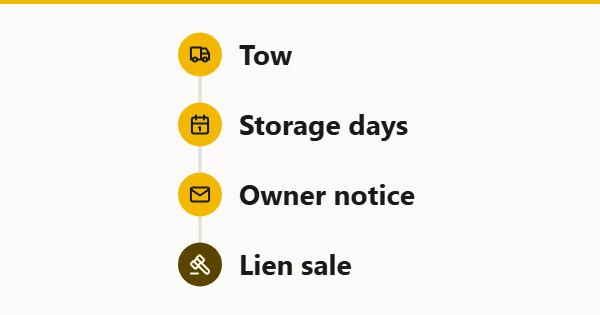
What is an impound lot? How it works and what it costs
An impound lot is a storage yard that holds towed cars until the owner pays. Here is who runs them, how storage is charged and each state's rules.
Updated
-

Find my towed car: where to look first, state by state
Find my towed car: call the police non-emergency line or the number on the lot's tow-away sign, then try your state's official lookup if it has one.
Updated
-
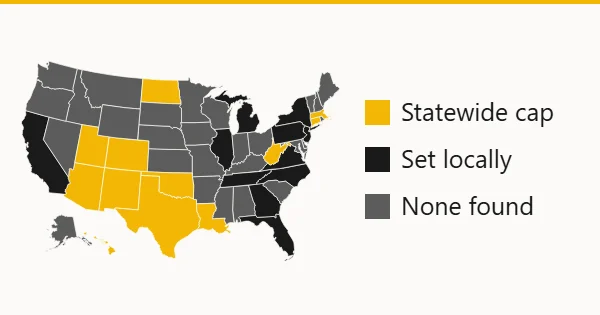
How much to get a car out of impound? Costs by state
How much to get a car out of impound: the tow, a daily storage charge and any release fees. See each state's limits and a worked example.
Updated
Sources (116)
- HRS 291C-165.5 Motor vehicle towing and storage; settlement; disabled vehicles
- HRS 291C-165.5 Motor vehicle towing and storage; settlement; disabled vehicles
- Honolulu Police Department policy: Towing Procedures
- Honolulu Police Department policy: Towing Procedures
- HRS 291C-165.5 Motor vehicle towing and storage; settlement; disabled vehicles
- HRS 290-1 Disposition by counties of certain abandoned vehicles
- HRS 290-1 Disposition by counties of certain abandoned vehicles
- HRS 290-1 Disposition by counties of certain abandoned vehicles
- HRS 290-10 Disposition of unclaimed vehicle
- Act 73 (2026), S.B. 2697 C.D. 1, section 2 amending HRS 249-10
- HRS 431:10C-117 Motor vehicle insurance: penalties
- HRS 431:10C-117 Motor vehicle insurance: penalties
- HRS 291E-61.5 Habitually operating a vehicle under the influence of an intoxicant
- HRS 286-136 Penalty
- HRS 286-136 Penalty
- HRS 286-136 Penalty
- HRS 286-132 Driving while license suspended or revoked
- HRS 291C-105 Excessive speeding
- HRS 291C-105 Excessive speeding
- HRS 261-17.6 Parking control at airports
- HRS 302A-1152 Unauthorized vehicles on school or public library grounds
- HRS 304A-2602 University of Hawaii parking: fines and other penalties
- HRS 290-11 Vehicles left unattended on private and public property
- HRS 290-11 Vehicles left unattended on private and public property
- HRS 290-11 Vehicles left unattended on private and public property
- HRS 290-11 Vehicles left unattended on private and public property
- HRS 290-11 Vehicles left unattended on private and public property
- HRS 290-11 Vehicles left unattended on private and public property
- HRS 290-41 Notice to police department
- HRS 290-41 Notice to police department
- HRS 291C-115 Wheel boots prohibited
- HRS 290-11 Vehicles left unattended on private and public property
- Honolulu Police Department policy: Towing Procedures
- HRS 290-11 Vehicles left unattended on private and public property
- HRS 290-11 Vehicles left unattended on private and public property
- HRS 290-11 Vehicles left unattended on private and public property
- Conference Committee Report No. 57-24 on H.B. 1577 (2024)
- H.B. 1577 (2024) measure status: Act 60
- Act 60 (2024), H.B. 1577 C.D. 1 amending HRS 290-11 and 291C-165.5
- HRS 291C-165.5 Motor vehicle towing and storage; settlement; disabled vehicles
- HRS 291C-165.5 Motor vehicle towing and storage; settlement; disabled vehicles
- HRS 291C-165.5 Motor vehicle towing and storage; settlement; disabled vehicles
- HRS 291C-165.5 Motor vehicle towing and storage; settlement; disabled vehicles
- HRS 290-11 Vehicles left unattended on private and public property
- HRS 290-11 Vehicles left unattended on private and public property
- HRS 291C-165.5 Motor vehicle towing and storage; settlement; disabled vehicles
- HRS 291C-135 Tow trucks; signage and insurance requirements
- HRS 290-11 Vehicles left unattended on private and public property
- HRS 290-11 Vehicles left unattended on private and public property
- HRS 290-11 Vehicles left unattended on private and public property
- HRS 290-11 Vehicles left unattended on private and public property
- HRS 290-11 Vehicles left unattended on private and public property
- HRS 290-11 Vehicles left unattended on private and public property
- HRS 290-11 Vehicles left unattended on private and public property
- HRS 290-11 Vehicles left unattended on private and public property
- HRS 290-11 Vehicles left unattended on private and public property
- HRS 290-11 Vehicles left unattended on private and public property
- HRS 291C-165.5 Motor vehicle towing and storage; settlement; disabled vehicles
- HRS 290-11 Vehicles left unattended on private and public property
- HRS 290-11 Vehicles left unattended on private and public property
- HRS 291C-165.5 Motor vehicle towing and storage; settlement; disabled vehicles
- HRS 290-11 Vehicles left unattended on private and public property
- HRS 291C-165.5 Motor vehicle towing and storage; settlement; disabled vehicles
- HRS 290-11 Vehicles left unattended on private and public property
- HRS 290-2 Notice to owner
- HRS 290-2 Notice to owner
- HRS 290-2 Notice to owner
- HRS 290-2 Notice to owner
- HRS 290-2 Notice to owner
- HRS 290-11 Vehicles left unattended on private and public property
- HRS 290-11 Vehicles left unattended on private and public property
- HRS 291C-165.5 Motor vehicle towing and storage; settlement; disabled vehicles
- HRS 290-11 Vehicles left unattended on private and public property
- HRS 290-11 Vehicles left unattended on private and public property
- HRS 291C-165.5 Motor vehicle towing and storage; settlement; disabled vehicles
- HRS 290-3 Public auction
- HRS 290-5 Waiver of public auction requirements
- HRS 290-5 Waiver of public auction requirements
- HRS 290-8 Derelict vehicle
- HRS 290-9 Disposition of derelict vehicle
- HRS 290-4 Repossession by person entitled
- HRS 290-7 Disposition of proceeds
- HRS 290-22 When vehicle deemed abandoned (motor vehicle repair business)
- HRS 290-23 Sale or disposition of vehicle (motor vehicle repair business)
- HRS 290-5 Waiver of public auction requirements
- Act 73 (2026), S.B. 2697 C.D. 1, section 2 amending HRS 249-10
- Act 73 (2026), S.B. 2697 C.D. 1, section 2 amending HRS 249-10
- Act 73 (2026), S.B. 2697 C.D. 1, section 2 amending HRS 249-10
- HRS 290-11 Vehicles left unattended on private and public property
- HRS 290-11 Vehicles left unattended on private and public property
- HRS 291C-136 Towing by consent; payment
- Honolulu Police Department policy: Towing Procedures
- Act 73 (2026), S.B. 2697 C.D. 1, section 2 amending HRS 249-10
- Honolulu Police Department policy: Towing Procedures
- HRS 290-11 Vehicles left unattended on private and public property
- HRS 291C-165.5 Motor vehicle towing and storage; settlement; disabled vehicles
- HRS 291C-165.5 Motor vehicle towing and storage; settlement; disabled vehicles
- Act 73 (2026), S.B. 2697 C.D. 1, section 2 amending HRS 249-10
- Act 73 (2026), S.B. 2697 C.D. 1, section 2 amending HRS 249-10
- HRS 290-4 Repossession by person entitled
- HRS 290-11 Vehicles left unattended on private and public property
- HRS 480-13 Suits by persons injured; amount of recovery
- HRS 480-13 Suits by persons injured; amount of recovery
- HRS 480-13 Suits by persons injured; amount of recovery, injunctions
- HRS 480-13 Suits by persons injured; amount of recovery, injunctions
- DCCA Office of Consumer Protection home page
- DCCA Office of Consumer Protection home page
- Honolulu Police Department policy: Towing Procedures
- Honolulu Police Department policy: Towing Procedures
- HRS 46-20.5 Regulation of towing operations (counties)
- HRS 290-11 Vehicles left unattended on private and public property
- HRS 290-11 Vehicles left unattended on private and public property
- HRS 249-10 Delinquent penalties; seizure and sale for tax (compiled text before Act 73 (2026))
- Act 73 (2026), S.B. 2697 C.D. 1, section 2 amending HRS 249-10
- Act 73 (2026), S.B. 2697 C.D. 1, section 2 amending HRS 249-10
- S.B. 2697 (2026) measure status: Act 73
Spotted an outdated figure? Tell us. See how we verify.