Every figure below comes from our verified state data and links to its official source.
Quick answer
If you had your car towed for illegal parking, find out who has it, then get it back as soon as you can, because storage charges can grow each day. Bring the documents your state page lists and an accepted way to pay. If you think the tow or the bill broke the rules, keep every paper and use your state's dispute process before its deadline.
Who can tow a car for a parking violation
There are two kinds of tows for parking in the wrong place. The rules for each one are different, so it helps to know which one happened to you.
A police or public tow. A police officer or a parking enforcement agency orders the tow from a street or other public place. The agency that ordered it can tell you where the car went and what it needs before the lot can release it. One state's data describes this kind of tow like this: California: A peace officer or a city/county/state parking-enforcement employee removes the vehicle under Vehicle Code §22651 (and related sections, e.g. a 30-day impound under §14602.6). Rates are set by agreement between the requesting law enforcement agency and the tow company; for CHP calls, the CHP Area commander approves each rotation operator's rates. The owner gets notice and a right to a poststorage hearing (§22852).[1]
A private-property tow. The owner or manager of a parking lot, an apartment complex or a store has the car removed without your consent. The towing company works for the property owner, not for the police. For example, Florida describes it this way: The owner or lessee of private property (or someone they authorize, such as a condominium association) may have a vehicle parked there without permission removed by a towing company. The tow must follow Fla. Stat. §715.07: posted tow-away signs, storage close by, notice to police, and release within one hour. The maximum rates are set by the county or city, not by the state.[2]
The details change from state to state, and cities and counties can add their own rules on top. Our guide to private property towing explains signs, written authorization and fee limits in more depth.
Car towed for illegal parking? Steps to get it back
Work through these steps in order. They keep the bill down and protect your evidence if you decide to dispute the tow later.
Step one: check whether the tow is still happening
If you come back while the tow truck is still there, you may be able to stop the tow. Some states set what the driver can charge at that point. In Texas, the rule reads: If you return while the tow truck is still hooking up your car, you can keep it free of charge. If the car is fully hooked up but has not left the lot, you can keep it by paying the drop fee.[3]
Stay calm and ask for what your state allows. Arguing with the driver does not change the rules, and the dispute process is the place to challenge the tow.
Step two: find out who has the car
Look for a tow-away sign near the spot where you parked. It may name the towing company and give a phone number. If there is no sign, or the number does not answer, call the police non-emergency line for the area. Some states make the tow company report a private tow to the police, which helps you trace the car:
- Arizona: Find out where the car is. After a private-property tow, call the number on the parking-lot sign. If DPS towed it, call DPS at (602) 223-2000. Otherwise, call the police non-emergency number where the car was parked: tow companies must report private tows to the police within one hour.[4]
- Arkansas: Find out who has the vehicle. If police ordered the tow, call the agency; if it was towed from a parking lot, the towing company must have reported the tow to the local police or sheriff within two hours, and the property owner must keep a copy of the tow authorization for anyone claiming the vehicle. Vehicles with no owner record, and vehicles scheduled for sale, are posted on the Towing and Recovery Board's website; if you cannot find a search there, call the Board at (501) 682-3801.[5]
If you still can't find it, our guide to finding a towed car collects the official lookups and who to call in each state.
Step three: get any release the police require
After a police tow, the lot may need a release from the agency before it hands the car back. Ask the agency whether there is a hold on the car and what it needs from you. The rule in Alaska puts it this way: If the police ordered the tow, get a written release from the officer or agency that ordered the removal; the lot may not release the vehicle without it.[6]
Step four: gather your documents
Call the lot before you go and ask what it accepts. Then bring the documents your state lists. These are the release documents in our data for a few states:
Texas — 4 items
State page: Texas
- Photo ID: any state driver's license or ID card, any federal photo ID, or a foreign-government photo ID (e.g. Mexico driver's license, matricula consular)[7]
- Proof of ownership or right to use the car (any one): driver's license matching DMV registration, insurance card naming you, certificate of title, notarized power of attorney, tax collector's receipt and registration renewal card, lease/rental agreement, or TDLR form VSF-13 / VSF-12 (one of several accepted options)[8]
- Evidence of financial responsibility (proof of insurance) must be accepted as an additional form of identification establishing ownership or right of possession[9]
- Payment of all towing, storage and other allowed fees[10]
Florida — 5 items
State page: Florida
- One current government-issued photo ID (enough to verify your identity)[11]
- Proof of your interest in the vehicle (original or copy, any one): electronic or paper title (one of several accepted options)[12]
- Or: a loan contract between the lender and the owner, or a lease between the lessor and the lessee[13]
- If you are acting for the owner or lienholder: a written agreement showing you are their agent. This is the only document that may need to be notarized.[14]
- Payment of the towing, storage and other allowed charges[15]
California — 6 items
State page: California
- Valid photo identification[16]
- Reliable documentation showing you are the owner, insured, or insurer, or that the owner authorized you to take the vehicle[17]
- Payment of all towing and storage-related fees[16]
- Police/law enforcement release document, if required (e.g., fatality or crime cases; agency release for impounds)[17]
- Proof of current vehicle registration (vehicles stored under VC §22850; early release from a 30-day §14602.6 impound)[18]
- Currently valid driver's license of the registered owner or agent (early release from a 30-day §14602.6 impound), or a court order[19]
Step five: pay and inspect the car
Ask for an itemized bill before you pay. Compare each line with the limits on your state page, if your state sets any. Our guide on how much it costs to get a car out of impound explains what each charge on the bill is for.
The payment methods a lot must accept are set state by state. These are the rules in our data for the same states:
Texas — 1 item
State page: Texas
A VSF, including a government storage lot, must accept cash, debit card and credit card for any charge related to delivery or storage of a vehicle. It may not refuse release because it cannot take a card, unless a power outage or machine malfunction that is not its fault prevents it. Tow companies must accept cash, credit and debit cards for a drop charge.[20]
Florida — 1 item
State page: Florida
We found no statewide rule that requires the lot to accept credit cards. The company must accept payment in at least two of three groups: (1) cash, cashier's check, money order or traveler's check; (2) bank, debit or credit card; (3) mobile payment, digital wallet or other electronic payment. A company could therefore lawfully refuse cards if it takes the other two groups. Local rules that conflict with this are preempted.[15]
California — 1 item
State page: California
Storage facilities must accept cash or a valid bank credit card in the name of the person presenting it (not a store/retail-seller card) from the registered owner, legal owner or agent, for private-property tows (VC §22658(k)) and for vehicles stored under VC §22651 (VC §22651.1). Under VC §22651.07(c)(5), the owner may pay by cash, insurer's check, or a valid bank credit card. Refusing a credit card exposes the facility to liability of four times the towing and storage charges (capped at $500 under §22651.1; misdemeanor plus 4x under §22658(k)).[21]
Walk around the car before you drive away. Take photos of any new damage and point it out to the staff while you are still at the lot.
What to do if you think the tow was wrong
A tow for a parking violation can still break the rules. The property owner may not have authorized the tow in writing. Or the bill may include charges above a limit your state sets. Any of these may give you grounds to dispute it.
Start by getting the car back, if your state lets you dispute the tow afterward. Then collect your evidence while it is fresh:
- photos of the spot, the signs, and the places where a sign should have been;
- the itemized invoice and the receipt;
- any notice the tow company or the lot gave you;
- the time you parked, the time you came back, and the names of the people you spoke to.
Each state handles disputes in its own way. Some send you to a court hearing, some to a state agency, and some leave it to a lawsuit. These are the processes in our data for three states:
Texas — 1 item
State page: Texas
Deliver a written request to the justice court before the 14th day after the vehicle was placed in the VSF, not counting Saturdays, Sundays and legal holidays. Include your contact details, the tow location and date, who authorized the tow, the VSF and the tow company, any receipts, and photos of the parking signs (or a statement that there was no sign). If you never got the required notice of hearing rights, the deadline does not apply. The 14 days do not start until the tow company or VSF gives you the information you need for the request. The court may charge a filing fee (the statute does not set the amount; TDLR's consumer page says $20) and must hold the hearing before the 21st calendar day after it receives the request. The court can order reimbursement of overcharges. The hearing covers private-property and other nonconsent tows into a VSF.[22]
Florida — 1 item
State page: Florida
The owner, the insurer or a lienholder may file suit in the county where the vehicle is stored to decide whether it was wrongfully taken or withheld or whether fees were wrongfully charged. At any time before the sale, you can get the vehicle released by posting a cash or surety bond with the clerk of court for the charges in the notice of lien plus storage to date; the clerk issues a certificate and the company must release the vehicle. If you post a bond, file suit within 45 days after the certificate is issued, or the bond can be paid to the towing company. The court may award damages, attorney fees and costs to the winner. A property owner who wrongfully has a car towed is liable for the towing and storage costs, damages, attorney fees and court costs. Counties and cities that set maximum rates must have a process for complaints about overcharges. For Highway Patrol rotation tows, a written overcharge complaint can be filed with the Highway Patrol.[23]
California — 1 item
State page: California
Police tows: request the poststorage hearing in person, in writing, or by telephone within 10 days of the date on the storage notice; the hearing must be held within 48 hours of the request (excluding weekends/holidays). If the storage is found unjustified, the agency pays the towing and storage costs. 30-day impounds under §14602.6 get the same §22852 storage hearing, which may also consider mitigating circumstances. Private-property (§22658) tows are excluded from the §22852 hearing; disputes go to the local law enforcement or prosecuting agency (the tower must give you its phone number) or to court, generally small claims. A tower charging above the local police/CHP rate is liable for four times the amount charged.[24]
Where your state sets a deadline to dispute the tow, it can be short, so read the dispute section of your own state page the same day you get the car back.
For a fuller look at what makes a tow unlawful and the remedies that states set, see our guide to illegal towing laws.
Common mistakes
Waiting to pick up the car. Storage can keep adding up while the car sits. Get it back first where your state allows a dispute afterward.
Paying without an itemized bill. Without one, you can't show which charge was too high.
Leaving without photos. Pictures of the signs and the spot are hard to get later, after a sign is fixed or moved.
Throwing away the papers. The invoice, the receipt and any notice of your rights are your evidence.
Missing the dispute deadline. Some states give you only a short window. Check your state page right away.
Assuming the tow was illegal because it felt unfair. If the car was parked where a valid sign said not to park, the tow itself may be lawful. You can still check the fees against your state's limits.
Questions people ask
What can I do if my car was unlawfully towed?
Get the car back, keep every document, and use the dispute process on your state page. That may mean asking a court for a hearing, filing a complaint with a state agency, or going to court for a refund. If you missed the hearing deadline, read your state page anyway: some states have other routes, such as a complaint to a regulator. In Arkansas, the steps are: If you think you were overcharged, talk to the owner of the towing company first, then file a complaint with the Towing and Recovery Board. Every towing invoice must carry a notice in bold telling you how to complain.[25]
How long does a car have to be parked before it can be towed in Texas?
Our data for Texas does not list a minimum time a car must sit before a tow from private property. It describes who may authorize the tow and what the state controls: A tow from a parking lot or other private property, authorized by the parking facility owner without the vehicle owner's consent. TDLR sets statewide maximum tow and drop fees for these tows. Cities or counties may set lower rates.[26]
Local rules and the posted signs may add more conditions, so read the sign where you parked and check your city's rules. If you think the tow broke a rule there, the hearing process on the state page asks for photos of the parking signs, or a statement that there was no sign.
Can you report someone for parking illegally?
Our state data does not cover how to report a parked car, so ask your city or local police how it works where you live. What the data does cover is who can have a car moved. On a street or other public place, that is the police or a parking agency, as the police tow rule quoted near the top of this article shows.
For a car on private property, such as a store lot or an apartment complex, the property owner or manager is the one who can authorize a tow, as the private-property rules quoted above show. Don't call a tow truck yourself for a lot you don't control.
Can I sue for unlawful towing?
In some states, yes. The law in these states lets you go to court over a tow, and some of them set what you can recover:
Minnesota — 1 item
State page: Minnesota
The owner or driver of a vehicle towed in violation of section 168B.035 (the rules for towing by a towing authority) is entitled to recover from the towing authority the greater of $100 or two times the actual damages, including the costs of recovering the vehicle. If a private impound lot, or a lot under an exclusive government contract, wrongly denies a qualifying owner the contents of the vehicle, the owner is entitled to injunctive relief and attorney fees; if the lot sells or disposes of the contents after the owner gave the required documentation, the owner is entitled to $1,000 in statutory damages plus attorney fees, in an action brought within 12 months of when the vehicle was impounded. On the other side, the owner of a vehicle repair or service property who removes a vehicle after giving the five-day certified-mail notice under section 168B.055 incurs no civil liability to the vehicle owner, and a private impound lot that sells a vehicle has a claim against the registered owner for unpaid towing, storage and inspection costs.[27]
Maryland — 1 item
State page: Maryland
State law does not set up a tow hearing. A company that tows from a parking lot in violation of the parking-lot towing law is liable for actual damages caused by the violation and is liable to the vehicle owner, a secured party, an insurer or a successor in interest for triple the amount paid to retake the vehicle. For tows requested by the Maryland State Police, the State Police must have a process to receive, investigate and decide complaints against tow companies on its tow list.[28]
Another route in Florida has two steps, in order: first post a bond to get the car released, then file suit: If you think the tow was wrongful or the fees were too high, you can get the car back by posting a bond with the clerk of court for the charges and then sue in the county where the car is stored. You can also complain to the county or city that set the rates.[29] If you post a bond, file suit within 45 days after the certificate is issued, or the bond can be paid to the towing company.[23]
Small claims court may be an option for smaller amounts, where your state allows it. Bring your photos, the invoice, the receipt, any notice from the company and a copy of the rule you think was broken. Your state page links each rule to its official source. For a large claim, a local lawyer can tell you which law applies to your tow.
Related state pages
- Alaska towing & impound fees · City pages: Anchorage, Juneau
- Arizona towing & impound fees · City pages: Chandler, Glendale, Mesa, Phoenix, Scottsdale, Tucson
- Arkansas towing & impound fees
- California towing & impound fees · City pages: Bakersfield, Clovis, Corona, Escondido, Fresno, Hayward, Huntington Beach, Los Angeles, Murrieta, Oakland, Rancho Cucamonga, Riverside, Roseville, Sacramento, San Bernardino, San Diego, San Francisco, Temecula
- Florida towing & impound fees · City pages: Jacksonville
- Maryland towing & impound fees · City pages: Baltimore
- Minnesota towing & impound fees · City pages: Minneapolis, St. Paul
- Texas towing & impound fees · City pages: Austin, Corpus Christi, Dallas, Irving, Pasadena
Related guides
-
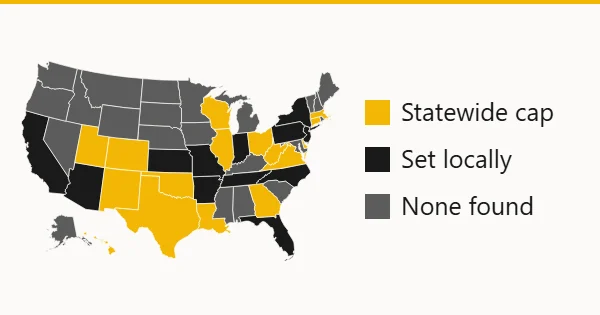
Private property towing: your rights and the limits
Private property towing is legal when state rules are followed: signs, notice to police and fee limits. See what it can cost and how to dispute a tow.
Updated
-

Find my towed car: where to look first, state by state
Find my towed car: call the police non-emergency line or the number on the lot's tow-away sign, then try your state's official lookup if it has one.
Updated
-
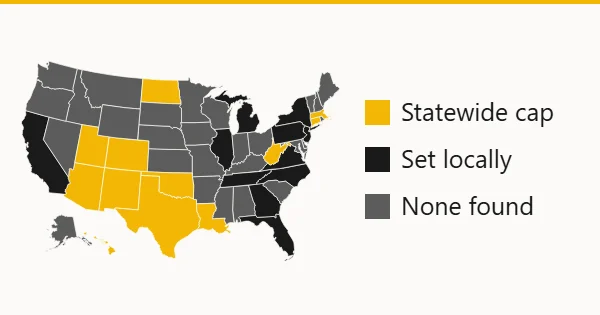
How much to get a car out of impound? Costs by state
How much to get a car out of impound: the tow, a daily storage charge and any release fees. See each state's limits and a worked example.
Updated
-
Illegal towing laws: your rights after a wrongful tow
Illegal towing laws explained: when a tow breaks the rules, how to dispute it, if you can sue, and what a tow company may owe you if it was wrong.
Updated
Sources (29)
- Cal. Veh. Code §22651 - police/agency authority to remove vehicles
- Fla. Stat. §715.07(2) Private-property towing authorized
- Consumer Information about Towing (not fully hooked up)
- A.R.S. 9-499.05(B) Required parking-lot sign contents
- Act 681 of 2009, § 1, Ark. Code § 27-50-1101(a)(2)(A) (report to police within two hours)
- 13 AAC 02.345(d) written release from the officer or agency
- Consumer Information about Towing (acceptable photo ID)
- Consumer Information about Towing (proof of ownership)
- Tex. Occ. Code §2303.160(b) Proof of insurance as identification
- Consumer Information about Towing (recovering your car)
- Fla. Stat. §713.78(17)(c) One photo ID
- Fla. Stat. §713.78(17)(a) Proof of interest (titles)
- Fla. Stat. §713.78(17)(a)3.-4. Loan and lease contracts
- Fla. Stat. §713.78(17)(a)6. Written agent agreement
- Fla. Stat. §713.78(19)(a) Payment forms
- Cal. Veh. Code §22651.07(e) Notice - release conditions (1)-(2)
- Cal. Veh. Code §22651.07(e) Notice - release conditions (3)-(4)
- Cal. Veh. Code §22850.3(a) - proof of current registration for release
- Cal. Veh. Code §14602.6(d)(2) - documents for early release
- Tex. Occ. Code §2303.159 Forms of payment of charges
- Cal. Veh. Code §22658(k)(1) - credit card or cash must be accepted
- Tex. Occ. Code §2308.452 Right to hearing
- Fla. Stat. §713.78(5)(a) Court challenge
- Cal. Veh. Code §22852(a) - poststorage hearing right
- Act 932 of 2025, § 5, Ark. Code § 27-50-1218(e)(2) (complaint notice on every invoice)
- Tex. Occ. Code §2308.002 Definitions (private property tow)
- Minn. Stat. 168B.035, subd. 6 Damages
- Md. Code, Transp. §21-10A-06(2) Triple the amount paid
- Fla. Stat. §713.78(5)(b) Release on bond
General information, not legal advice. See how we verify figures.